
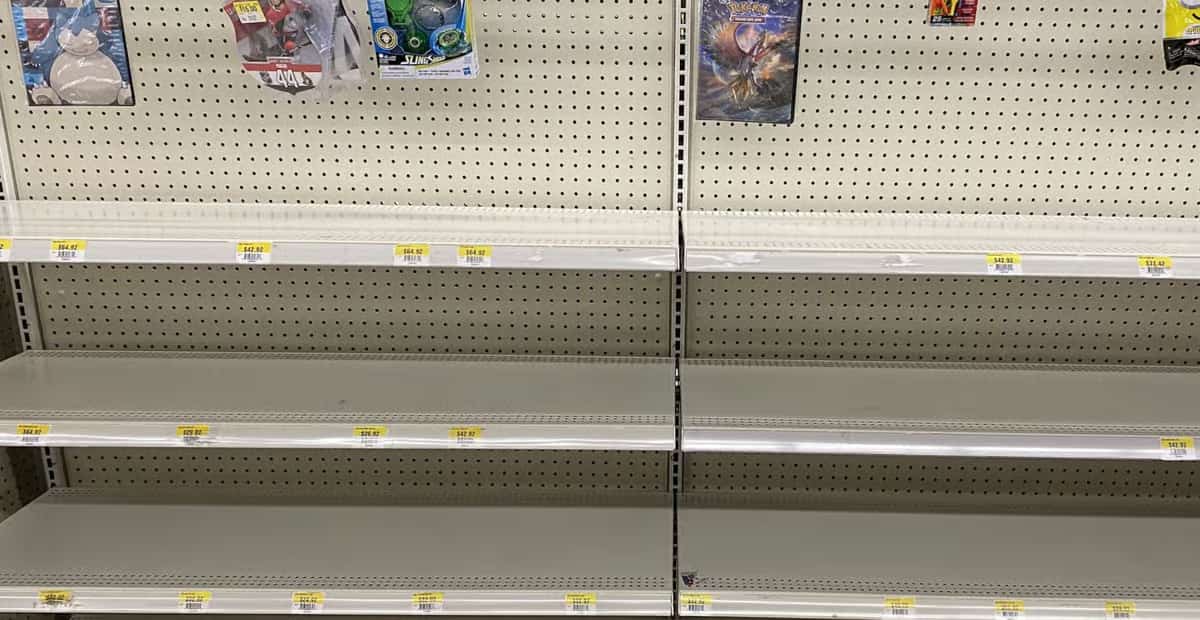
You know the feeling. It’s release day for that new set you’ve been dreaming about for months. You wake up early, maybe you even skip your morning coffee, and head to the store with that pure, simple excitement bubbling in your chest.
But then you see it. The line. The other people walking out with armfuls of the exact Elite Trainer Boxes you wanted. By the time you get to the aisle, you’re greeted with a soul-crushing sight: a barren shelf, picked cleaner than a Snorlax’s plate five minutes after a meal.
This, my friends, has been the reality of being a Pokémon fan for about six years now. Our wonderful hobby has been under siege by a shadowy organization, a real-life Team Rocket, whose only goal is to profit from our passion.
But here’s the thing, and it’s the reason this article needed a serious rewrite: the scalping problem in 2026 does not look like the scalping problem of 2021. The money has moved. The countermeasures have gotten genuinely bizarre. And over in Japan, buying a booster box might soon require a government ID card and a facial scan. I’m not making that up.
So let’s do this properly. Grab a snack. We’re going deep.
So, What Exactly IS a Scalper?
In the world of Pokémon, a scalper is someone who swoops in and buys up huge amounts of new, in-demand product with one goal: to flip it on eBay or Facebook Marketplace for way more than they paid. They create a fake drought, turning our fun hobby into their personal stock market, and leaving the rest of us out in the cold.
The key word there is new. Scalping is about intercepting product somewhere between the distributor and you. That’s a very different activity from simply selling cards, and it’s worth being precise about that before anybody grabs a pitchfork.
The Good, The Bad, and The Misunderstood
Now, hold your Rapidash. Not everyone selling cards is a villain. It’s easy to throw the “scalper” label around, but it’s important to know who’s who in this ecosystem.
- The Scalper (aka Team Rocket Grunt): Our main villain. They’re the ones camping outside Target at 5 a.m. or running automated software to clear every box online in seconds. They don’t care about the art, the game, or the community. To them, a Charizard is a dollar sign with a tail. Their whole business model depends on stopping you from buying at retail so that you have to buy from them.
- The Local Game Store Owner (aka Nurse Joy): These are the heroes of our story! They run the shops where we play tournaments, trade with friends, and build our community. Sometimes, when the market gets really crazy, they have to raise prices on a hot set just to stay in business or to avoid being instantly emptied by flippers. But their goal is to serve the community, not to bleed it dry.
- The Investor (aka The Slowpoke Well): A different kind of collector entirely. They’re playing the long game, buying sealed product or graded cards from older, out-of-print sets and sitting on them for years. They aren’t the reason the shelf is empty on launch day for the newest set. If you want the honest version of how that plan actually works out, we wrote about why a card collection isn’t an ATM.
Understanding these differences is key. The way you fight a bot army is completely different from the way you support your local game store.
Track Your TCG Collection
Create your free Card Codex account to monitor card prices, view real-time market trends, and analyse your portfolio’s growth.
Start Tracking Now — It’s FreeThe Anatomy of the Modern TCG Scalper
To win this war, we need to know our enemy. What makes a scalper tick? What are their secret moves? Let’s pop the hood on the modern scalping machine. Spoiler alert: it’s not pretty, and it’s a lot more professional than most people assume.
Motivation: It’s All About the Poké-Dollars
Here’s the number one thing to understand: scalpers don’t love Pokémon. They don’t get a thrill from pulling a beautiful illustration rare. They don’t care about building a clever deck. For them, a Pokémon card is a stock, a commodity to be flipped for cash.
You’ll see these same people scalping concert tickets one month, limited-edition sneakers the next, and Pokémon cards when a new set drops. They’re like a flock of Murkrow, swooping in wherever they smell profit. Their group chats don’t talk about lore or strategy. They talk about margins, hold times and exit liquidity. It’s a cold, calculated business.
The Scalper’s Toolkit: From Brute Force to High-Tech Warfare
Level 1: The Grunt Work
This is the old-school method. Physical presence and brute force. We’re talking about camping outside Walmart for hours, following the delivery trucks from store to store, and coordinating in groups to get around “one per customer” limits. This is what leads to those ugly scenes you see online, grown adults literally fighting over pieces of cardboard. It’s the opposite of everything our community stands for.
Level 2: The Tech Wizard
On the internet, the average fan doesn’t stand a chance. And I mean that literally, because a modern scalper setup isn’t one program. It’s a toolchain: a stock monitor, a pool of residential proxies, a CAPTCHA-solving layer, a bank of pre-warmed accounts, and a checkout module. Each of those parts is sold separately by a different vendor, which tells you everything about how mature this market has become.
The second a product goes live, the checkout module fires. It’s like trying to outrun a Deoxys in its Speed Forme. By the time you’ve typed in your credit card number, the battle is already over. We broke the whole thing down in our piece on how automated bots plunder a TCG expansion release, and honestly it’s grim reading.
Level 3: The Supervillain Tactics
This is where it gets truly wild. The most dedicated operators have leveled up to some seriously shady, next-level strategies.
- X-Ray Vision: I’m not kidding. Back in 2024, an industrial CT scanning firm published a case study proving that computed tomography can identify specific cards inside a sealed booster pack, just from tiny density differences in the foils and card stock. They started fielding requests from collectors almost immediately. Whether or not your average flipper can afford a seven-figure scanner is beside the point. The technique exists, and it torpedoes the basic promise that a sealed pack is actually a mystery. If you want to know what those scanners are hunting for, our guide to card rarities and pull rates explains exactly which cards are worth the trouble.
- The Inside Job: Ever wonder how some people get cases of product before it even hits the shelves? Sometimes it’s an inside connection, and this isn’t just folklore anymore. In August 2026, eBay started pulling in-hand listings of 30th Celebration product under its stolen property policy, after The Pokémon Company International told the platform the items hadn’t gone out through authorized channels. Leakage from the distribution chain is real, and it’s a genuine head start.
- Market Manipulation: The smartest (and slimiest) operators don’t just control the supply, they nudge the price signal itself. The classic version: find a card listed at a fair price, message the seller offering way more, and talk them into relisting higher. They never actually buy it. The goal is to trick the platform’s algorithm into thinking the “market price” went up, which makes their own stash look more valuable. It’s one of the many Pokémon card scams you have to watch out for.
This isn’t a few random people trying to make a quick buck anymore. This is an organized, tech-savvy industry. And to fight it, we need an organized, savvy response.
Table 1: Collector vs. Reseller vs. Scalper
| Role | Core Motivation | Primary Methods | Impact on the Hobby |
|---|---|---|---|
| Collector / Player | Passion, nostalgia, fun, and community. | Buying cards to keep or play, trading with friends, enjoying local events. | Positive: The heart and soul of the hobby. Real demand, and the reason the game exists. |
| Legitimate Reseller / LGS | Running a business and giving people a place to play. | Buying from official distributors, selling at fair market prices, hosting tournaments. | Neutral to positive: The essential infrastructure of our community. |
| Scalper | Cold, hard cash. Nothing more. | Mass buyouts with bots, manufactured scarcity, rapid flipping. | Negative: Drains the fun, prices out kids, adds absolutely nothing. |
The Perfect Storm: How We Actually Got Here
Most explanations of the scalping crisis stop in 2021. That’s only half the story, and honestly it’s the less important half.
Boom One: The Pandemic Catalyst
Remember 2020? We were all stuck at home, bored out of our minds, and some of us had a little extra cash. We couldn’t go to the movies or on vacation, so millions of us dug our old binders out of the attic. It was a wave of pure, comforting nostalgia. But that wave was about to turn into a tsunami.
The Logan Paul Effect: The “Sportification” of Pokémon
While the pandemic lit the match, it was Logan Paul who threw the can of gasoline on the fire. When the YouTube megastar started livestreaming himself opening a $200,000 box of First Edition cards, the world took notice.
Suddenly Pokémon cards weren’t just a game. Influencers reframed them as a legitimate alternative investment, somewhere between fine art and rare sneakers. This was the “sportification” of Pokémon, where the focus shifted from the joy of collecting to the thrill of speculation. It brought in a flood of people who had never played a game of Pokémon in their lives, and prices went absolutely bananas. Sets like Celebrations and Evolving Skies became instant scalper bait and never really came back down.
Boom Two: Pocket, and the Shortage That Wouldn’t End
Here’s the part almost every article misses, and it’s the part that actually explains 2025 and 2026.
Pokémon TCG Pocket launched in October 2024 and pulled millions of people into the card game, including a huge number who had never touched physical product or hadn’t touched it in twenty years. Five months later, in March 2025, The Pokémon Company International said it was printing at maximum capacity. Surging Sparks in November 2024 and Prismatic Evolutions in January 2025 sold out on contact, and the shortage has basically never let up since.
Now sit with the scale of this for a second. The Pokémon Company printed roughly 10 billion cards in the year to March 2026, pushing lifetime production past 85 billion. The single-year record is 11.9 billion, set in the year to March 2024. Roughly half of every Pokémon card that has ever existed was printed in the last four years.
Half of a thirty-year print history. In four years. And it still wasn’t enough.
That’s the fact I want you to hold onto, because it wrecks the most common suggestion you’ll hear on Reddit. “Just print more” was the plan. They did print more. They printed more than at any point in the franchise’s history, three years running. The shelves still emptied.
The Ripple Effect: A Hobby Under Siege
“Okay,” you might be thinking, “so what? Prices go up. What’s the big deal?” The big deal is that the damage goes way beyond our wallets.
The Economic Toll: Pricing Out the Next Generation
A $49.99 Elite Trainer Box that resells for triple turns an affordable hobby into a pay-to-play nightmare. And who does that hurt most? Kids. The franchise was built for them. But a kid’s allowance can’t compete with a 200% markup. When they can’t find or afford cards, they get frustrated and move on to something else. We lose the next generation of trainers quietly, one bored eleven-year-old at a time.
Table 2: A Quick Look at the Scalper Tax
Two quick warnings before you read this. First, resale on modern sealed has moved a lot in the last year, so treat these as indicative ranges rather than live quotes. Second, if you’re buying today, check recent sold listings rather than asking prices, because those two numbers have drifted a long way apart.
| Product | What You Should Pay (MSRP) | Resale at the 2025 Peak | Where It Sits in 2026 |
|---|---|---|---|
| Prismatic Evolutions Elite Trainer Box | $49.99 | Roughly triple retail | Still well above retail but off the peak. Pokémon Center versions carry an extra premium. |
| Prismatic Evolutions Super Premium Collection | $119.99 | Multiples of retail | Still trading at a hefty premium. |
| Evolving Skies Booster Box | Around $144 at release | Several times retail | Out of print and climbing steadily rather than spiking. |
| Team Up sealed product | Around $144 at release | Ten times retail or more | Long out of print. Vintage-adjacent pricing now, not scalper pricing. |
| Journey Together Elite Trainer Box | $49.99 | Around triple retail | Fallen hard as print caught up. A good example of patience paying off. |
| Surging Sparks Elite Trainer Box | $49.99 | Well above retail during the shortage | Broadly tracking retail while product is on shelves. |
All figures in USD. Resale is indicative and moves week to week.
The LGS Squeeze
And let’s not forget our local game stores. They’re caught in the crossfire, like a poor Tangela in a Rapidash stampede. Allocation is tight, so they get less product than demand justifies. Then, for the few boxes they do get, they face a terrible choice: sell at retail and get wiped out by flippers in minutes, or price to market and get called scalpers by their own regulars. It’s a no-win situation, and it’s grinding down the businesses that hold this community together.
The Psychological Scars: From Joy to Joyless Enterprise
This isn’t just about money. The thrill of the hunt is gone, replaced by the anxiety of the empty shelf. The joy of opening a pack gets tainted by the math of how much you overpaid. Plenty of long-time fans describe the hobby as having become a soulless stock market. When you see grown men throwing hands at Costco over cardboard, you know something has gone badly wrong.
Hobbies are supposed to be good for our mental health. They’re our escape. When yours becomes a source of constant low-level stress, it stops doing its job.
What Changed in 2026: The Correction Nobody Saw Coming
Okay. Here’s the development that has genuinely reshaped this whole conversation, and it isn’t a policy or a clever store rule. It’s the market.
Through late 2025 and into 2026, modern sealed product and modern singles fell off a cliff from their 2025 peaks. Reporting across the hobby has put the correction somewhere in the 20% to 50% range depending on the product, with some of the most heavily speculated chase cards giving back roughly half their value. Phantasmal Flames booster boxes and Journey Together ETBs both took heavy hits. Out-of-print material held up far better than in-print material, which is exactly what you’d expect once supply finally catches up with hype.
Now read that carefully, because it cuts both ways.
The good news: this is precisely what kills the scalping economy. Flipping only works while resale reliably beats retail by enough to cover the risk, the fees and the holding time. Flipping a modern in-print ETB in 2026 is a much worse trade than it was eighteen months ago, and a lot of people who bought sealed as an “investment” in 2025 are sitting on inventory worth less than they paid. I’d be lying if I said there wasn’t a small, petty part of me enjoying that.
The bad news: a correction is not a cure. Genuinely scarce items still vanish in seconds, because that scarcity is structural rather than speculative. And a falling market punishes the ordinary collector who bought at the top just as thoroughly as it punishes the flipper. If that’s you, and you’re weighing up what to do next, our guide to where to sell Pokémon cards is a better starting point than panic-listing everything at once.
The honest summary is this: scalping in 2026 is a worse business than it was in 2025, and the shelf on release day is still empty. Both of those things are true at the same time.
The Counter-Offensive: Strategies to Reclaim the Hobby
Alright, enough doom and gloom. It’s time to talk about fighting back! From the highest levels of The Pokémon Company down to the checkout line at your local shop, people are getting creative. Some of it is brilliant. Some of it is frankly a bit dystopian. Here’s the battle plan.
The Pokémon Company’s Arsenal (The Heavy Hitters)
- Print More, and Build More. Production has been pinned at or near 10 billion cards a year for three years running, which looks like the current hard ceiling. So in December 2025, TPCi’s printing subsidiary Millennium Print Group confirmed a 1.27 million square foot campus in Morrisville, North Carolina, including a brand new 866,000 square foot facility. Construction runs through 2027 with full operations expected in late 2028. That’s the real fix for supply, and it’s about two years away. Frustrating, but at least it’s coming.
- The Government ID Play. From around August 2026, The Pokémon Company is requiring identity verification via Japan’s My Number Card to enter lotteries and buy selected TCG products through Pokémon Center Online, and to register for certain official events. You scan the card’s chip with your phone through a government-approved service, and the company says it doesn’t retain the ID number itself. Because My Number Cards go to Japanese citizens and long-term residents, this also locks overseas buyers out of those channels entirely, which appears to be at least partly the point.
- Facial Recognition. Yes, Really. Announced on the official Pokémon Card Game site in July 2026, Japan’s Pokémon Card Stores now scan your face on entry and when you collect a numbered queue ticket. The system checks whether you’ve already been in that day and refuses a second entry. Reaction in Japan has been broadly supportive. Reaction elsewhere has been a lot more uneasy about handing biometric data to a toy company, especially given it applies to kids. Both reactions strike me as completely reasonable.
- The Shrink-Wrap Snipe. Some retailers, particularly in Japan, snip the plastic off boxes at the counter. Why? Because once a product isn’t factory sealed, its resale value plummets. Blunt, a bit heartbreaking for sealed collectors, and it goes straight for the scalper’s throat.
- The Digital Waiting Room. Queues and lottery systems are now standard for big drops. They’re imperfect, and Pokémon Center’s own queue has taken flak since it stopped showing your position in line, but a lottery is one of the very few mechanisms a bot can’t simply out-click. Just be careful how you use it, because there are ways to get your Pokémon Center account banned without meaning to.
The Frontline Defenses (Retail & Local Store Strategies)
- Purchase Limits at the Big Boxes. Walmart capped trading card purchases at five packs or boxes per in-store transaction from November 2025, after a viral video of a scalper clearing an entire display. Target applied one-unit-per-guest limits across its Pokémon collaboration range during its 2026 anniversary drops. Enforcement varies wildly store to store, which is the eternal weakness of every limit-based approach.
- The “Behind the Counter” Gambit. Many stores now keep hot items at the customer service desk. You have to ask for them specifically, which makes it much harder for one person to quietly walk out with the lot.
- Raffles and Lotteries. Instead of a mad dash, some stores run a draw for the chance to buy. It’s random, it’s fair, and it completely neutralizes camping and automation.
- The “Community-First” Shield. This is my personal favorite. Some shops run two-tier pricing: if you’re a regular who plays in their league, you buy at retail. If you’re a stranger off the street, you pay market. It’s a genius way to reward the people who actually keep the lights on, though I’ll admit it can feel unwelcoming if you’re a genuine newcomer.
- The “Fan Quiz” (The Japan Model). This one is amazing. In Japan, some stores make you prove you’re a real fan before you can buy. They’ll show you four Pokémon and you have to name them. A real fan breezes through. A scalper who only cares about money starts sweating. “Uh… is ‘Yellow Mouse’ one of them?”
The Legal Picture, and Why It Hasn’t Helped At All
Here’s the gap almost nobody talks about, and it drives me a bit mad.
In the United States, the BOTS Act of 2016 makes it illegal to use software to circumvent purchase limits. Sounds perfect, right? Except it applies to event tickets only. Venues with a capacity over 200 people. Cardboard doesn’t count.
The bill that would fix this is the Stopping Grinch Bots Act, which extends the same prohibition to general retail goods and lets the FTC enforce it. It has been introduced over and over, including in the current Congress, and every single version so far has died in committee without ever reaching a floor vote.
So in 2026, running a bot farm to vacuum up a retailer’s entire allocation of booster boxes is not specifically illegal at the federal level, in a way that doing the exact same thing to concert tickets absolutely is. Some states have their own statutes, and the UK and parts of the EU have moved on ticket bots, but general retail is basically untouched. Every effective countermeasure we have has come from companies and shop owners, not lawmakers. Make of that what you will.
Grassroots Resilience (The Power of the People)
This is where we come in. We, the community, have the most powerful weapon of all: our wallets.
- The Boycott. The number one rule is still: DO NOT BUY FROM THEM. If nobody pays the markup, the model collapses. Be patient. Resist the FOMO. Most modern sets get reprinted.
- Buy the Single, Not the Sealed. If you want a specific chase card, buy the chase card. Buying sealed and hoping to pull it is a lottery ticket with worse odds and, in a falling market, worse math. Our breakdown of which sealed product is actually best value if you just want to rip packs is worth reading before you spend anything.
- The Information Network. Discord servers and alert accounts flagging genuine retail restocks are how normal collectors get anywhere near a drop. Just remember scalpers monitor the same channels. If you’d rather automate the boring part, you can set up price alerts and let them do the watching for you.
- Championing the LGS. Even if they’re a few dollars more than a big-box store, that money is an investment in the health of our community. A hobby with nowhere to play is just a portfolio.
- Sharing the Love. In a sea of frustration, post your cool pulls. Tell people about the awesome owner at your local shop. The anger is loud enough already. The joy needs help being heard.
Table 3: The Anti-Scalping Battle Plan
| Strategy | Who’s Doing It | The Gist | The Good News | The Catch |
|---|---|---|---|---|
| Increased Print Runs | TPCi | Print until the scalpers drown in cardboard. | More cards for everyone, eventually. | Already at max capacity. Real relief waits on a factory that opens in 2028. |
| Government ID Checks | TPC (Japan) | My Number Card required for select purchases and lotteries. | Makes multi-account buying genuinely hard. | Locks out non-residents. Real privacy questions. |
| Facial Recognition | TPC (Japan) | One store entry per person, per day. | Kills repeat-visit buyouts stone dead. | Biometric scanning, including on children. |
| Unsealing Product | Retailers | Snip the shrink-wrap at the counter. | Destroys the sealed resale premium. Genius! | Annoys the minority of legitimate sealed collectors. |
| Purchase Limits | Walmart, Target, LGS | Caps per transaction or per customer. | Meaningfully slows the shelf-clearers. | Enforcement varies enormously by store. |
| Raffles & Lotteries | Retailer (LGS) | A random draw for the right to buy. | The fairest system. Bots can’t win a lottery. | You might simply not win. |
| Community-First Pricing | Retailer (LGS) | Retail for regulars, market for walk-ins. | Rewards the real community members. | Can feel exclusionary to new fans. |
| Fan Verification Quiz | Retailer | “Name these Pokémon to buy a pack!” | Hilarious and effective at weeding out non-fans. | Impossible to scale. |
| Anti-Bot Legislation | US Congress | Extend ticket-bot law to retail goods. | Would make the core tactic outright illegal. | Introduced repeatedly. Dies in committee every time. |
| Community Boycott | Us | Just. Don’t. Buy. From. Scalpers. | The ultimate weapon. Cuts off the money supply. | Requires iron-willed collective patience. |
What To Actually Do On Release Day
If you take one thing away from all this, make it this list.
- Decide what you actually want. A specific card, or the experience of ripping packs? If it’s the card, buy the single. You’ll almost always pay less and you’ll definitely sleep better.
- Check sold listings, not asking prices. In a correcting market the gap between what sellers want and what buyers pay has gotten enormous. Only one of those numbers is real.
- Wait three months on anything still in print. In-print sets drift back toward retail once the launch crush passes. The premium you pay on day one is almost entirely impatience with a price tag. The Phantasmal Flames drop was a masterclass in why waiting works.
- Watch the tariff situation if you’re in the US. Import costs feed into shelf prices in ways that have nothing to do with scalpers, and we covered how US tariffs are influencing the hobby separately.
- Build a relationship with one local shop. Holdbacks and preallocation for regulars are the single most reliable route to retail-price product that exists, and no bot on earth can replicate it.
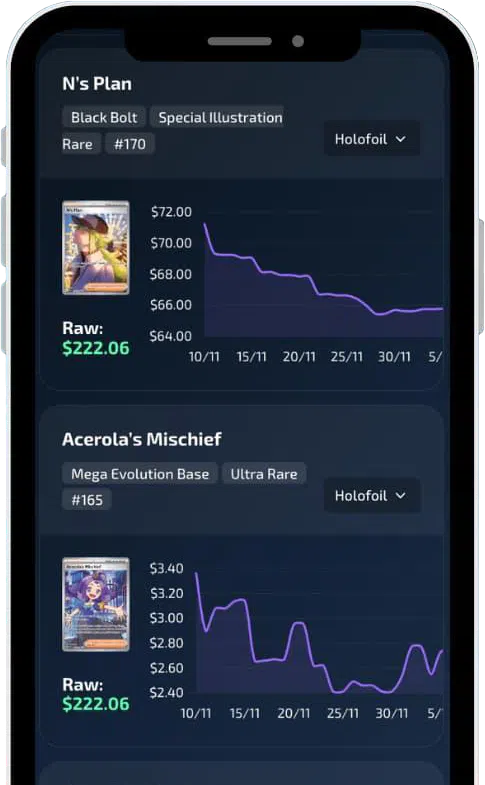
- Know what you own. Understanding your collection’s real, current value is what stops you panic-buying at the top or panic-selling at the bottom. It’s the entire reason we built collection tracking on Card Codex, and it’s free.
Conclusion: Beyond the Hype, For the Future of the Hobby
There is no single villain here, and no single solution. The Pokémon Company has to keep expanding capacity and keep experimenting with access controls, even when those controls make us all a bit uncomfortable. Retailers have to move past limits that only work when the person on the till feels like enforcing them. Lawmakers could close the bot loophole tomorrow and have repeatedly chosen not to.
And most importantly, the community has the lever it has always had: refusing to fuel the scalper market, championing the local stores that serve players instead of portfolios, and pushing the culture back toward play, collection and compassion.
Here’s the genuinely hopeful part, though. In 2026, the market did some of that work for us. Scalping modern in-print product is a worse business than it was a year ago, and a lot of speculators have learned a very expensive lesson about cardboard. The less hopeful part is that the shelf is still empty on launch day, and the real fix for that is a printing facility that comes online in 2028.
So until then: be patient, buy what you love, and support the shop that lets you play there. That was always the answer. It still is.
What have you seen at your local store this year? Share your thoughts in the comments!