
Updated September 2026.
You’ve spent years, maybe even decades, carefully curating a Pokémon card collection that would make Professor Oak himself shed a tear of pride. You’ve hunted for those elusive first editions, traded with fellow trainers, and maybe even pulled a Charizard that’s so sparkly it could blind a Zubat.
Your collection is more than just a stack of cardboard. It’s a treasure chest of memories, a testament to your dedication, and let’s be honest, a pretty hefty investment.
But what happens if the unthinkable occurs? What if a rogue wave (or a leaky pipe) turns your prized possessions into a pulpy mess? What if a real-life Team Rocket decides your collection is the perfect thing to nab? Without the right protection, you could be left with nothing but a Pokémon-sized hole in your heart and your wallet.
That’s where insurance comes in. Now, I know what you’re thinking. “Insurance? Isn’t that for boring adult stuff like cars and houses?” And you’re not wrong, but when your “boring adult stuff” includes a first-edition, PSA 10 Charizard, it’s time to start thinking like a grown-up Pokémon Master.
First, The Bit Nobody Wants To Read
I wish this section was hypothetical. It isn’t.
Card shops and collectors have been getting hit relentlessly. CNN reported in April 2026 that shops from Las Vegas to New York to Vancouver had been robbed of more than half a million dollars in cards inside a few months, with the head of the Certified Trading Card Association pointing out the obvious problem: cards have no serial numbers, they fit in a pocket, and they resell instantly.
It gets more specific than that. Three masked men emptied a Brentwood, California store of roughly $15,000 in cards in under 40 seconds. A Burbank shop lost six figures of Pokémon and sports cards to crowbars and power tools in about two minutes. And in June 2026, two collectors packing up after a New Jersey card show were robbed at gunpoint in the hotel parking lot of more than $150,000 in cards and cash.
Read that last one again. That was not a store. That was two guys with a car boot full of binders, doing exactly what you and I do most weekends.
Why now? Because the money got silly. In February 2026 a PSA 10 Pikachu Illustrator sold through Goldin for $16,492,000, which Guinness World Records certified as the most expensive trading card ever sold at auction in any category. When the ceiling moves that hard, everything underneath it moves too, and so does the attention of people who would very much like your Charizard. If you want the fuller picture of that price climb, I went into it properly in why Pokémon cards got so expensive.
So. Insurance.

Track Your TCG Collection
Create your free Card Codex account to monitor card prices, view real-time market trends, and analyse your portfolio’s growth.
Start Tracking Now — It’s FreeIs My Collection Even Worth Insuring?
This is the first question every collector asks, and it’s a valid one. Not every collection needs a dedicated insurance policy. If your collection consists mainly of common cards from recent sets, your standard home insurance might be enough to cover it. However, if you have any of the following, you should seriously consider getting specialized collectibles insurance:
- High-Value Cards: Do you have any cards worth a few hundred, or even a few thousand, dollars? A single chase card can be enough to justify a specialized policy on its own.
- Graded Cards: If you have cards graded by a reputable company like PSA, Beckett, or CGC, you’ve already invested in their value. It’s a no-brainer to protect that investment.
- First-Edition or Shadowless Cards: These early prints are the holy grail for many collectors, and understanding what makes shadowless Pokémon cards so special is key to appreciating their value.
- Complete Sets: A complete set of a popular expansion, especially if you are trying to build a master set in Pokémon TCG, can be worth a small fortune.
- A Large Collection: Even if you don’t have any individual “big hitters,” a large collection of cards can add up to a significant amount of money.
If you’re still not sure, a good rule of thumb is this: if the thought of losing your collection in a fire or theft makes you feel physically ill, it’s probably time to get it insured.
And one thing I want to say loudly, because I get asked it constantly: you do not need to own a house for any of this. Renters insurance works the same way, with the same sublimits and the same gaps, and specialist collectibles policies do not care whether your name is on a mortgage or a lease. If you’re 24 and renting a one-bed with $8,000 of slabs in the closet, this article is aimed at you as much as anyone.
Step 1: Valuing Your Collection
Before you can insure your collection, you need to know what it’s worth. This is the most time-consuming part of the process, but it’s also the most important. An accurate valuation will ensure you get the right amount of coverage and that you’re not paying for more than you need.
Taking Inventory
The first step is to create a detailed inventory of your collection. This might seem like a daunting task, but it’s essential for both insurance purposes and your own peace of mind. There are many fantastic ways to sort and organize your Pokémon cards that can make this process much easier. Here’s what you should include for each card:
- Pokémon Name: This one’s easy!
- Set Name and Number: You can find this at the bottom of the card.
- Rarity: Is it a common, uncommon, rare, holo, or ultra-rare? Familiarizing yourself with the different Pokémon card rarities and symbols is crucial for this step.
- Condition: Be honest with yourself here. Is the card in mint condition, or has it seen a few battles? The specific Pokémon card conditions explained by grading companies can help you make an accurate assessment.
- Estimated Value: We’ll get to this in a minute.
- Cert number, if it’s slabbed: This is the single most useful thing on an inventory. It is third-party proof that the card existed, in that grade, in your possession.
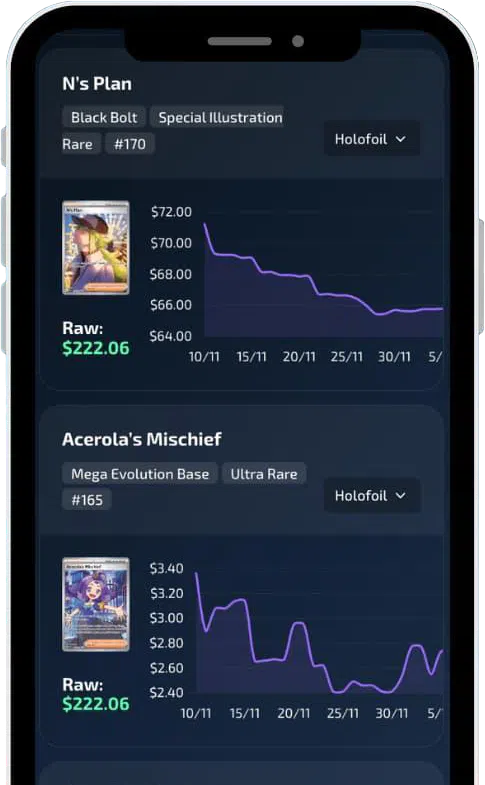
You can use a simple spreadsheet, but honestly, in 2026 there is no reason to. Point our card scanner at a card and it identifies it and prices it, and the whole lot lands in your collection with a running total attached. That total is the number your insurer is going to ask you for.
Here’s the bit collectors skip, and it’s the bit that actually matters when you claim: photograph everything, and store the photos somewhere that isn’t your house. Cloud, email to yourself, a drive at your parents’ place, anything. A burned house does not care that your beautiful inventory spreadsheet was on the laptop in the burned house.
Determining the Value
Once you have your inventory, it’s time to start putting a price tag on your cards. There are many factors that determine what makes a Pokémon card valuable, from its rarity to its condition. Here are a few ways to figure it out:
- Online Marketplaces: TCGplayer and eBay are your best friends here. Search for individual cards and see what they have recently sold for. Look at “sold” listings, not “for sale” listings. Asking prices are fan fiction.
- Price Guides: Sites like PriceCharting aggregate marketplace data into an estimated value, which is fine as a sanity check on a big collection.
- Professional Grading: For your most valuable cards, it’s worth getting them professionally graded. PSA, Beckett and CGC will authenticate your cards and assign a grade from 1 to 10, and the slab itself is a great way to protect the card. If you’re weighing up who to send to, we broke down PSA vs BGS vs CGC in detail.
- Professional Appraisal: For very large or valuable collections, a professional appraiser can value the whole thing in one document. Worth knowing: most specialist collectibles insurers do not actually require an appraisal for ordinary items, which I’ll come back to.
One warning, and I say this with love. The number on your collection dashboard is a market value, not a guaranteed payout and not a price someone has promised you. Card prices move fast in both directions, and I wrote a whole piece on why your collection isn’t an ATM because collectors kept learning this the expensive way. Insure the realistic number, not the dream number.
Step 2: Choosing Your Insurance Policy
Now that you know what your collection is worth, it’s time to find the right policy. You have two main options.
Home or Renters Insurance
Your standard policy will likely provide some coverage for your collectibles, but it’s usually not enough for a valuable Pokémon card collection. Two things go wrong here, and they go wrong quietly.
First, sublimits. Standard policies cap payouts on categories of valuables at levels that were set with wedding rings in mind, not slabs. Second, valuation. As the specialists themselves point out, homeowners coverage is typically based on actual cash value rather than current market value, which for a nine-year-old piece of cardboard that has quadrupled in price is a genuinely terrible basis for a payout.
If your collection is worth more than a few thousand dollars, you’ll need to schedule it: a “rider” or “floater” added to your existing policy. This is a real upgrade, not a fudge. The Insurance Information Institute notes that floaters cover losses of any type, including the accidental ones a standard homeowners policy will not touch. The catch is paperwork: scheduled items usually need appraising, and new acquisitions typically need reporting within 30 to 90 days of purchase, which is a lot of admin for a hobby where you might buy eleven cards on a Tuesday.
Specialized Collectibles Insurance
For most serious collectors, this is the way to go. These policies are built for collections, and they offer a handful of things your home policy simply does not:
- Market Value Coverage: You insure the collection for what it is worth on the market rather than what a depreciation table thinks a used card is worth.
- Broad Peril Coverage: A typical collectibles policy covers theft, burglary, fire, accidental breakage, loss in the mail and natural disasters, with flood covered outside the highest-risk zones.
- Low or No Deductible: Collector policies from the main specialist carriers start at a $0 deductible, which means a claim does not cost you $1,000 before it pays you a cent.
- Less Paperwork: Most specialists will not make you appraise and schedule every card. You keep your own inventory, and only individual items or sets above a threshold (typically $25,000) have to be listed separately.
- Inflation and New Acquisition Cover: Some policies let you bolt on an automatic monthly increase in your coverage limit, which is a neat fix for a hobby where your total moves every month.
Here is roughly how the two stack up:
| Home or renters policy (unscheduled) | Scheduled rider / floater | Specialist collectibles policy | |
|---|---|---|---|
| How it values cards | Usually actual cash value | Agreed or appraised value | Market value of the collection |
| Typical deductible | Your full home deductible | Often $0 | Often $0 |
| Appraisal needed? | No, but coverage is capped low | Usually yes, per item | Not for most items, you keep the inventory |
| New cards covered? | Within the overall cap | Report within 30 to 90 days | Adjustable, optional auto-increase |
| Claim hits your home policy? | Yes | Yes | No, it’s a separate policy |
General comparison for US collectors. Exact terms, limits and thresholds vary by carrier and by state, so treat this as a starting point for questions rather than a quote.
The Part Where I Correct My Past Self
An earlier version of this article told you that all-risk collectibles policies cover “mysterious disappearance.” That was wrong, and I’d rather say so than quietly delete it.
Mysterious disappearance is the industry term for property that is simply gone with no evidence of how. No forced entry, no police report, no explanation. Go and read the exclusions on a specialist collector policy and you will find mysterious disappearance sitting right there on the excluded list, alongside gradual deterioration (fading, creasing, denting), dampness or dryness of the atmosphere, and temperature extremes that are not caused by fire.
Chew on that second group for a minute, because it matters more than the first. Your policy is not a humidity policy. If your binder warps in a damp basement over two summers, that is not a claim, that is storage. Insurance covers sudden disasters. It does not cover you being careless for eighteen months.
Scheduled floaters are actually the ones more likely to cover mysterious disappearance, which is a genuine point in their favour if you’re the kind of person who loses things. Ask the specific question, get the specific answer in writing.
Step 3: Finding Your Insurance Provider
In the US, the specialist end of the market is small and easy to shortlist. Collectibles Insurance Services runs a dedicated Pokémon program and has been insuring collections since 1966. American Collectors Insurance covers trading cards as a named category, and if you’re a member, USAA routes collectibles coverage through American Collectors and knocks 10% off. Mainstream carriers play here too, mostly through partners: Allstate offers collectibles coverage via Bluewater, and most large insurers will write a scheduled rider if you ask.
When you compare, ignore the marketing and ask five questions:
- Is my collection valued at market value, or actual cash value?
- What is the deductible, and is there a minimum loss amount before it pays?
- What is the threshold above which a single card has to be scheduled separately?
- Am I covered away from home: at shows, in transit, in a storage unit?
- What exactly is excluded?
On price, the honest answer is that it depends on your value, your zip code and your safeguards, and that anyone quoting you a universal percentage is guessing. Broadly, a five-figure collection tends to land in the low hundreds of dollars per year on a specialist collector policy, and carriers will knock the price down if you have a monitored alarm, deadbolts, a safe and smoke detectors. Get two or three quotes. It takes about ten minutes each and the spread will surprise you.
One number worth knowing before you call: if you have a single card over roughly $25,000, it will have to be scheduled individually, which means documentation, which means the cert number and photos you hopefully took in Step 1.
Step 4: Protecting Your Collection
Insuring your collection is only half the battle. You also need to stop the claim happening in the first place, and insurers will reward you for it.
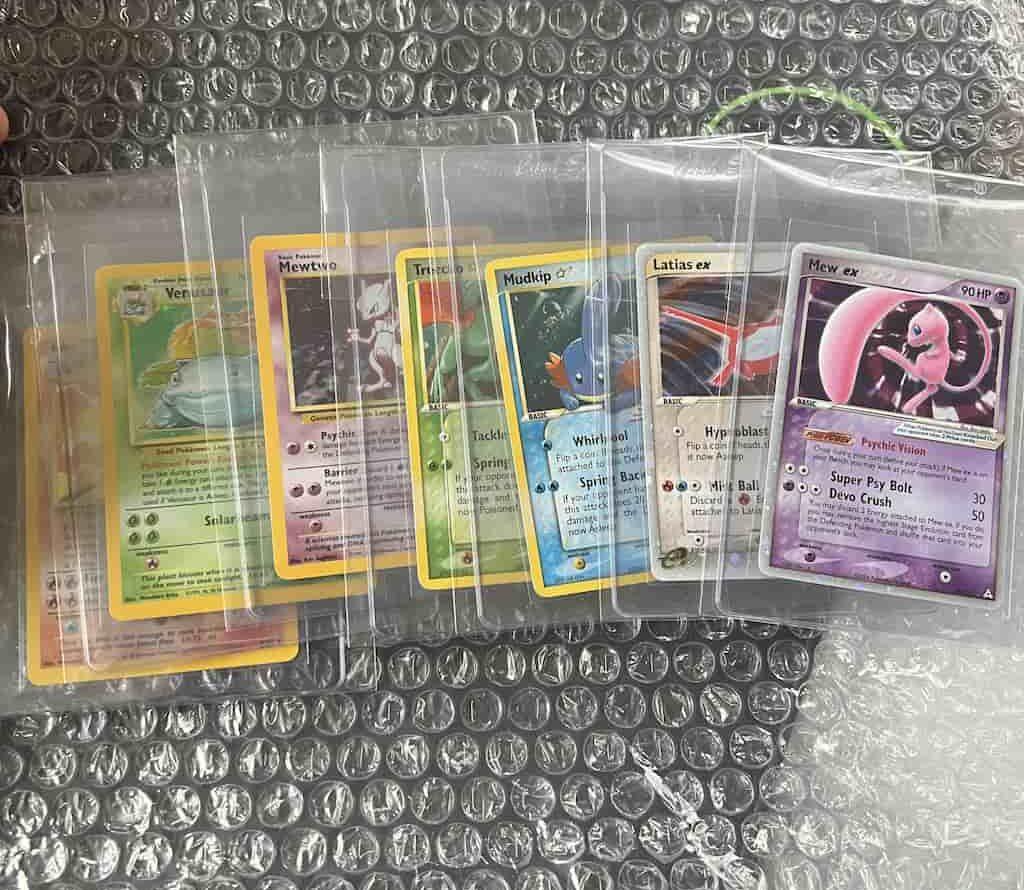
- Sleeves and Binders: The first line of defense is a good set of sleeves and a high-quality binder. Use acid-free, non-PVC sleeves and binders with D-rings to prevent your cards from getting warped.
- Toploaders and Card Savers: For your most valuable cards, use rigid toploaders or semi-rigid card savers for an extra layer of protection.
- Climate Control: Store your cards in a cool, dry place, away from direct sunlight. Remember that exclusion list: humidity damage is on you, not your insurer. If you display your grails, do it properly, and our guide to UV protection, frames and stands covers how.
- Security: A safe, deadbolts, a monitored alarm and cameras. These are not just theft deterrents, they are line items on a quote form that reduce your premium.
- Discretion: Nobody wants to hear this one, but posting your grail wall with a recognisable window view behind it is advertising. The New Jersey card show robbery was not a random crime. Somebody knew what was in that car.
What About Bank Vaults?
Here is the myth I most want to kill, because it is comforting and completely wrong.
A bank safe deposit box does not insure your cards. The FDIC is explicit about it: a safe deposit box is storage space, not a deposit account, so the contents are not covered by FDIC insurance if they are damaged or stolen, and banks generally do not insure box contents either. Read your rental agreement and you’ll find the bank disclaiming liability in fairly cheerful language.
A box is a great security measure. It is not a policy. If your slabs live in one, you still need coverage, and you need to tell your insurer where the collection is actually kept, because policies are written against a scheduled location.
The same goes for storage units, with an extra wrinkle: specialist policies typically treat a public storage facility as optional extra-premium coverage with its own cap, often around $100,000. Do not assume.
What About Card Vaults?
This is the genuinely new option since I first wrote this piece, and for some collectors it’s the best answer on the page.
The PSA Vault is a facility in New Castle, Delaware, where vaulted items are stored fully insured, under 24/7 security, in a climate-controlled environment. It accepts cards encapsulated by PSA, SGC, BGS or CGC, and raw cards are not eligible. You manage everything digitally, and you can route cards there straight from a grading submission instead of having them shipped home.
For a collector whose value is concentrated in twenty slabs, that solves the theft problem, the humidity problem and the insurance problem in one move, and it removes the transit risk of a card bouncing back and forth. The trade-offs are real though: withdrawal and shipping fees, no holding the card, and a set of cards you cannot show anyone in person. Check the current fee schedule before committing, because it changes.
My honest take? Vault the four cards you would cry about. Keep the rest at home where you can actually enjoy them, and insure them properly. A collection you never see is just a brokerage account with better artwork.
Cards In The Mail
Every collector eventually posts something terrifying, usually to a grading company. Your home policy and your collectibles policy may or may not follow the card out the door, so check first: specialist policies generally include loss in the mail and transit coverage, though transit is often subject to a separate sublimit.
The carrier side has hard ceilings you should know cold. USPS caps purchasable insurance at $5,000 of indemnity, Priority Mail and Priority Mail Express include $100 as standard, and Registered Mail is the only domestic option that goes up to $50,000. If you are sending a $9,000 slab across the country in a bubble mailer with $5,000 of cover, you have not insured that card, you have insured most of it.
Pack it like you mean it, too. We covered how to ship Pokémon cards safely separately, and a rejected claim usually comes down to packaging, not bad luck.
Step 5: Making a Claim
Hopefully, you’ll never have to make a claim on your insurance policy. But if you do, here’s what you need to do:
- Contact the Police: If your collection is stolen, file a police report immediately. Almost every insurer requires one for a theft claim, and without it you are not getting paid.
- Document the Loss: Photograph the damage, the forced entry, the water line, all of it, before you tidy anything up.
- Contact Your Insurance Provider: Start the claim as soon as possible. There are filing deadlines, and carrier claims in particular can be as short as 60 days from the mailing date.
- Provide Documentation: Your inventory, your photos, cert numbers, receipts, purchase records. This is the moment Step 1 either saves you or sinks you.
- Circulate the Cert Numbers: If slabs were stolen, get those cert numbers out to the grading company, to dealer groups and to the communities that trade them. Stolen cards are hard to trace precisely because they have no serial numbers, and a slab cert is the closest thing you have to one. It also helps other collectors avoid buying your stolen cards by accident.
And No, You Cannot Just Write It Off
Collectors ask me this every time a theft story goes round, so let’s settle it. In the US, you generally cannot deduct a stolen Pokémon collection on your taxes. The IRS position is that personal casualty and theft losses are not deductible unless the loss is caused by a federally declared disaster, with an expansion to state-declared disasters starting in the 2026 tax year.
Your burglary is not a federally declared disaster. There is no consolation prize on Schedule A. Either you were insured or you ate it.
I’m not an accountant and your situation may have wrinkles mine doesn’t, so talk to one if real money is involved. But please do not skip a $200 policy because you assume the tax code has your back.
Keeping It Current
Here’s the failure mode almost nobody plans for: you insure a collection for $12,000 in 2024, the hobby goes vertical, and you claim in 2026 on what is now a $30,000 collection. You are not getting $30,000. You are getting your limit.
Underinsurance is the quiet way this goes wrong, and given how fast values have moved, it is probably the most likely thing to actually cost you money. Two habits fix it:
- Re-check your collection total every six months, and after any big acquisition. Your tracker already knows the number.
- Set price alerts on your top ten cards so a spike does not go unnoticed for a year.
Then actually call your insurer and raise the limit. I know. It’s the least fun ten minutes in the hobby. Do it anyway.
The Final Word
Your Pokémon card collection is more than just a hobby. It’s a passion, a source of joy and nostalgia, and yes, even a little bit of financial security.
But the hobby changed. The values changed, the thieves noticed, and the comfortable assumption that your home policy has you covered turns out to be wrong in about four different ways. Taking a weekend to inventory the thing properly and an afternoon to get it insured is not paranoia, it’s the price of admission now.
So don’t be a Slowpoke. Value it, photograph it, insure it, and check the number twice a year. That way you can go back to the part you actually enjoy, which is looking at beautiful cardboard and pretending you’re going to stop buying more.
A true Pokémon Master is always prepared.