
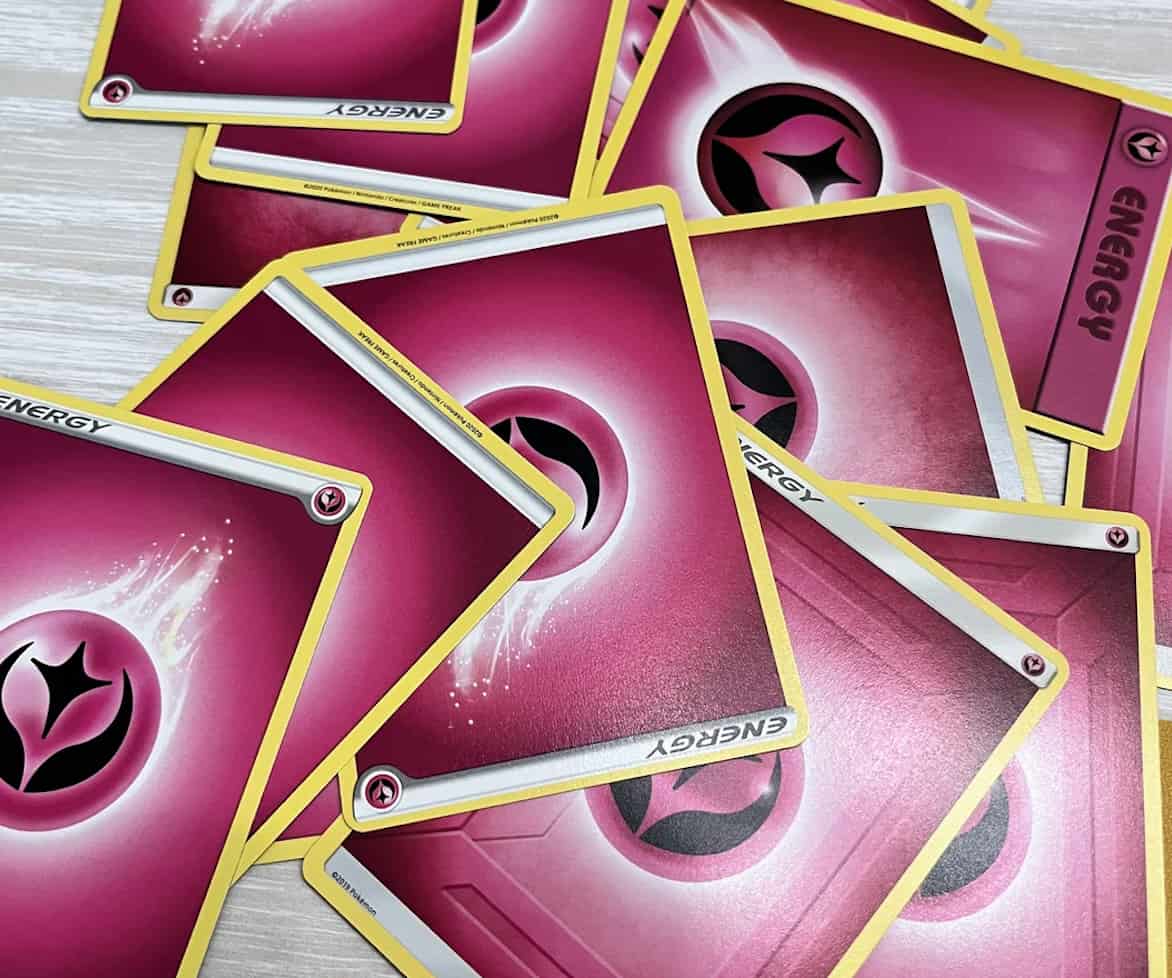
You’re cracking open a fresh booster pack from a new Mega Evolution set. You’re rifling through the cards, hoping for that ultra-rare pull, when you suddenly realize something… where are all the pink cards? You see Psychic, you see Darkness, but the unmistakable bubblegum-pink border of the Fairy type is nowhere to be found among the different types of Pokémon card.
You’re not imagining things! The Fairy type was officially retired from the Pokémon Trading Card Game at the start of the Sword & Shield era, which hit English shelves in February 2020 (Japan got there first, in December 2019). This wasn’t a glitch or a printing error. It was a deliberate decision by The Pokémon Company and Creatures, the studio that actually designs the cards, to simplify the game for the long haul.
And more than six years later? The pink still hasn’t come back. Not even now that Mega Evolution, the mechanic that gave us some of the most iconic Fairy cards ever printed, has made its big return. More on that in a moment.
The Great Type Shake-Up of Sword & Shield
Think of the start of the Sword & Shield TCG series as a massive balance patch, like when a video game drops a huge update that changes how everything works. Pokémon laid it all out in its official rundown of the Sword & Shield changes: new first-turn rules, a new Resistance value, reshuffled Weaknesses and, the headline act, one fewer type.
Here’s the funny part. The Sword & Shield video games kept the Fairy type. Sylveon is still very much a Fairy on your Switch. So this was never about matching the games’ type chart. The card game went its own way, and in the process it changed what some of the very symbols on Pokémon cards mean.
So, Where Did the Fairy Pokémon Go?
Don’t worry, your favorite Fairy Pokémon haven’t been banished to the Distortion World! They’ve just found a new home.
The Pokémon that are Fairy-type in the video games (like Gardevoir, Clefable, or Alcremie) are now printed as Psychic-type cards in the TCG. That’s been the rule since the very first set of the era, the Sword & Shield base set, and it hasn’t budged since.
Now, here’s where a lot of explainers get the Weakness story a bit muddled. For years, Psychic Pokémon in the TCG were usually weak to other Psychic Pokémon. Sword & Shield flipped that, so Psychic cards are generally weak to Darkness instead. The former Fairies were a special case: during the Sword & Shield era, cards like Sylveon VMAX kept the exact same Weakness to Metal that Fairy cards had always had.
So no, Metal decks didn’t suddenly get a shiny new advantage in 2020. Fairy cards had generally been weak to Metal all along! The real shake-up was for the regular Psychic crowd. And by the Scarlet & Violet era, even the Fairy exception had loosened up: Gardevoir ex, the biggest former Fairy of them all, is weak to Darkness just like any other Psychic Pokémon.
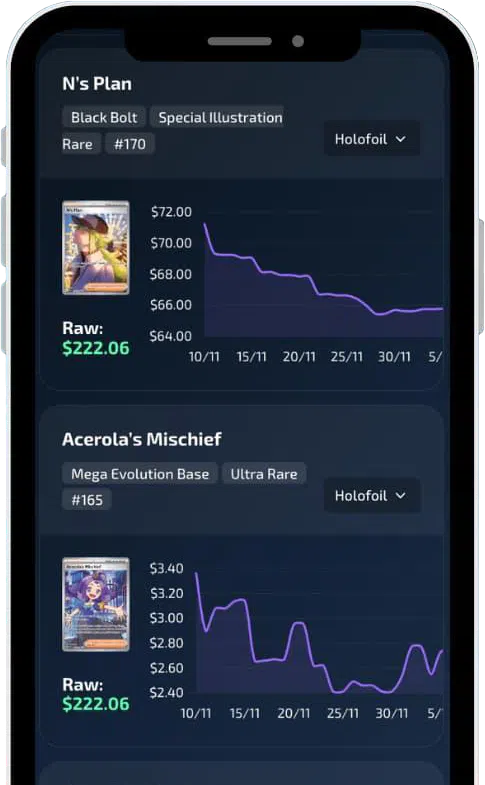
Track Your TCG Collection
Create your free Card Codex account to monitor card prices, view real-time market trends, and analyse your portfolio’s growth.
Start Tracking Now — It’s FreeThe Domino Effect: Other Types Got a Makeover Too!
Removing the Fairy type created a few ripples that affected other types in the game, leading to a couple of other important changes that happened at the same time.
Poison’s Move to the Dark Side
From the Diamond & Pearl era right up until 2020, Poison-type Pokémon from the video games (think Garbodor or Crobat) were printed as Psychic types in the TCG. Before that, they were mostly Grass! With all the former Fairies moving into the Psychic house, it was about to get very crowded in there.
So Pokémon moved them out. To keep the types balanced, Poison-type Pokémon are now printed as Darkness-type cards. The first big one a lot of players will remember is Crobat V, a Poison/Flying bat sitting proudly in the Darkness section of the binder. It makes a lot of thematic sense, too. Linking poison and toxins with the sneaky, disruptive tactics of the Darkness type feels like a natural fit.
Dragon’s Newfound Freedom
This is one of the most interesting consequences. In the XY and Sun & Moon eras, Dragon-type Pokémon had a Weakness to the Fairy type. With their only predator gone, what would happen to them?
For a while, nothing, because there weren’t any! Dragon-type cards didn’t appear in Sword & Shield at all until Evolving Skies in August 2021. When they finally flew back in, the TCG made a bold choice. Instead of handing them a new Weakness (in the video games, Dragons are weak to Ice, Dragon and Fairy), Dragon types were reworked with no Weakness at all, and no Resistance either.
That rule has stuck. Dragons briefly vanished again at the start of Scarlet & Violet, came back in Paldea Evolved, and they’re still Weakness-free today. That’s an incredible defensive buff that makes powerful Dragon Pokémon even more formidable on the battlefield. The catch? Plenty of dual-type dragons now get printed as their other type instead, so true Dragon cards are rarer than they used to be.
The Whole Shake-Up at a Glance
| What changed | XY and Sun & Moon eras | Sword & Shield onward |
|---|---|---|
| Fairy Pokémon (Gardevoir, Sylveon, Clefable) | Fairy type, weak to Metal | Psychic type (Metal Weakness in Sword & Shield, varies by card since) |
| Poison Pokémon (Garbodor, Crobat) | Psychic type | Darkness type |
| Psychic Weakness | Usually Psychic | Usually Darkness |
| Dragon Weakness | Fairy | None (and no Resistance) |
| Water Weakness | Usually Grass | Usually Lightning |
| Darkness Weakness | Usually Fighting | Grass or Fighting |
| Number of types | 11 | 10 |
General rules of thumb, not iron laws. Individual cards can break the pattern, so always check the Weakness box on the card itself.
Not sure where that Weakness box lives? Here’s how to read a Pokémon card top to bottom.
Why Did They Really Do It?
So, beyond just “balancing the game,” what were the core reasons for such a drastic move? For a while, fans could only guess, because the original announcement never actually gave one. Then the man in charge of the game explained it.
Straight From the Game Director
In a 2020 interview with ComicBook.com, Atsushi Nagashima, Game Director of the Pokémon TCG at Creatures, laid out the thinking. A video game can juggle well over a dozen types because the console does all the math for you. At a kitchen table, you have to remember every matchup yourself, and fewer types keeps that manageable.
He also said the old rock-paper-scissors setup made the metagame swing around too quickly, so Sword & Shield was built around five core types (Grass, Fire, Water, Lightning and Fighting), with everything else hanging off those. And that old Psychic-weak-to-Psychic rule? He described it as “somewhat complex and unintuitive to players.” Hard to argue with that one.
Streamlining the Game
At its heart, the Pokémon TCG wants to be a game that a seven-year-old and a Worlds competitor can both sit down and enjoy. Eleven types, each with its own tangled web of Weaknesses and Resistances, is a lot to hold in your head. Folding Fairy into Psychic, then shifting Poison over to Darkness so Psychic didn’t turn into a bloated mega-type, trimmed that web right down and made the game a little bit easier for new players to grasp.
Shaking Up the Metagame
The “metagame” (or “meta”) refers to the most popular and effective strategies being used in competitive play at any given time. And Fairy decks had some genuinely huge moments in the meta before the axe fell. Pokémon’s own strategy team was calling Gardevoir-GX one of the most powerful cards in the game back in 2017. Lost Thunder’s Granbull left such a mark that Pokémon’s Pitch Black preview this summer still gave it a nostalgic shout-out.
Was nerfing Fairy the actual goal, though? Personally, I don’t buy it. Nothing Pokémon has said points that way, and the director’s explanation is all about simplicity, not punishing one type. What the change definitely did was send everyone back to the drawing board. It was like a new Elite Four had taken over: old strategies were no longer guaranteed to work, and players had to come up with entirely new ways to build decks and counter threats. That keeps the competitive scene fresh, exciting and dynamic, and honestly, that’s the best argument for the whole shake-up.
Six Years of Pink: A Quick Fairy Timeline
The Fairy type’s run in the TCG was short but sweet. Fairy Pokémon and Basic Fairy Energy first showed up in English in the Kalos Starter Set in late 2013, and the type properly arrived with the XY base set in February 2014.
From there it gave us some absolute bangers: M Gardevoir-EX, Gardevoir-GX, and the gorgeous Gardevoir & Sylveon-GX, to name a few. The last main expansion to print Fairy cards was Cosmic Eclipse in November 2019, which closed out the Sun & Moon era with one last burst of pink. For the bigger picture of how every era fits together, check out our short history of each Pokémon TCG era.
Will the Fairy Type Ever Come Back?
This is the big one. With Mega Evolution back in the TCG and in English packs since September 2025, a lot of us were quietly hoping the pink would come back with it. After all, the original XY era, Mega Evolution’s first run, was exactly where the Fairy type was born.
It didn’t. And the best way to see it is to put two Megas side by side. Back in 2015, M Gardevoir-EX from Primal Clash was a Fairy type, weak to Metal, with an attack that did 30 damage for every Fairy Energy on your side of the board.
Fast forward to the Mega Evolution base set, and Mega Gardevoir ex is a Psychic type, weak to Darkness, with an attack that does 50 damage for every Psychic Energy on your board. Same Pokémon, same big-battery idea, completely different color. (If you want one for the shelf, it’s the face of the Mega Gardevoir Elite Trainer Box.)
So will it ever come back? My honest guess is no, at least not any time soon. The whole game has been built around ten types for more than six years now, and even Pokémon TCG Pocket, the mobile game, doesn’t have a Fairy type at all. Nothing Pokémon has shown for the rest of 2026 points to a pink revival either. Never say never with this franchise, but I wouldn’t save your Moon Stones for it.
Gone, But Not Forgotten
So, while you won’t find any new Fairy-type cards in packs, your old collection is still a piece of Pokémon history!
If you play, those cards are still legal in the Expanded format, which covers cards from Black & White onward, and Pokémon confirmed Expanded is staying put for 2026 (ban list aside). Standard is a different story. Fairy cards left Standard when the Sun & Moon sets rotated out, and Basic Fairy Energy went with them in September 2021, making it the first Basic Energy ever to rotate out of Standard. Pour one out.
If you collect, the Fairy type has something most types will never have: it’s finished. There’s a fixed list of pink cards, roughly six years of them, which makes a complete Fairy binder a genuinely achievable goal. Sorting by type is one of my favorite ways to organize a collection, and a wall of pink pages is a sight to behold.
The crown jewel is the Gardevoir & Sylveon-GX alternate art from Unbroken Bonds, illustrated by Atsuko Nishida. And there’s even a sneaky late entry for completionists: the Celebrations: Classic Collection reprinted the original Xerneas-EX in October 2021, pink border and all. Log them in your Card Codex collection as you go and you’ll always know exactly how close you are.
Ultimately, the retirement of the Fairy type was a bold move designed to keep the Pokémon TCG simple, healthy and evolving for years to come. It was a new chapter for the game, and six years on, it’s held up. Even if it means our collections are a little less pink.