

Updated September 2026
You’ve done it. After weeks of trading, opening packs, and maybe spending a little more than you told your significant other, you’ve finally slotted the last card into your binder. Every single card from the latest Pokémon set, from 001 all the way up to the number before the slash, is present and accounted for. You lean back, admiring your work, a true master of your cardboard domain.
Then your friend leans over, peers at your collection, and utters the nine words that can send a shiver down any collector’s spine: “Nice, but are you going for the parallel set?”
You smile and nod confidently, while inside your brain is screaming, “A parallel what now? Is that like an evil twin set from another dimension? Did I miss half the cards?!”
Don’t panic. This isn’t some secret, high-level collector term designed to make you feel inadequate. A parallel set is a simple and, frankly, pretty cool concept that adds a whole new layer to the hobby. So, let’s demystify the Pokémon TCG’s shiniest secret.
What in the World Is a Parallel Set?
In the simplest terms, a parallel set is a copy of the main set that runs alongside it, where (almost) every card has been given a special holographic treatment.
Think of it like a secret menu for your Pokémon cards. You have the standard menu: the regular set that everyone knows. But then there’s this other, fancier menu where you can get nearly every one of those items, from the humblest Caterpie to the most powerful Trainer card, with a shiny, glittery twist.
The most common form this takes is the “Reverse Holo.” This is where the terminology gets a little weird, but stick with it. In a regular holo card, which is one of the classic Pokémon card rarities, the Pokémon in the artwork is shiny, and the rest of the card is not. A reverse holo, as the name suggests, does the reverse. The Pokémon in the art box is a normal, non-shiny illustration, but the entire card around the art box (the background, the text area, all of it) has a holographic finish.
So, for most card numbers in a set, there are two versions:
- The Standard Version: The normal card, which might be non-holo or a regular holo if it’s a Rare.
- The Reverse Holo Version: The special, parallel version where the card’s background is shiny.
This means a full “master set” isn’t just the main set; it’s the main set plus a reverse holo of nearly every card in it. Yes, the math is starting to sound terrifying, but that’s the challenge.
The Small Print: Which Cards Don’t Get a Twin?
Now, I did say almost. Not every card gets a parallel version, and this is where a lot of new collectors end up hunting for cards that simply don’t exist.
In modern sets, the big hitters sit it out. In the Scarlet & Violet era, Pokémon ex and ACE SPEC cards had no reverse holo versions, and the secret rares numbered past the set total (your Illustration Rares, Special Illustration Rares and gold cards) are already the fancy version, so they don’t get a shiny twin either.
This isn’t new, by the way. Back in the e-Card days, Expedition printed reverse holos of both its holo and non-holo Rares, and then Aquapolis and Skyridge stopped making reverse versions of the holo Rares altogether.
So the real formula is: the main set, plus one reverse holo for every Common, Uncommon, regular Rare and Trainer that qualifies. Card Codex set pages show how many extra variants each card has, which is a lot less stressful than doing the math on a napkin.
Track Your TCG Collection
Create your free Card Codex account to monitor card prices, view real-time market trends, and analyse your portfolio’s growth.
Start Tracking Now — It’s FreeWait, Why Is It Called “Parallel”?
Because the two versions run side by side and never cross. Same card, same number, same set, just a different finish. Picture two train tracks heading to the same destination, except one of them sparkles.
The word itself comes from the wider trading card world, where sports card collectors have chased “parallels” (alternate-finish versions of a base card) for decades. Pokémon folks mostly say “reverse holo,” but you’ll see the parallel label in serious places. The biggest US card marketplace, TCGplayer, even labels reverse holos as “Parallel Foil” in its pull rate breakdowns. Same thing, fancier name.
If you want the full side-by-side on how the two finishes differ in the hand, we’ve got a whole guide on holo vs reverse holo cards.
The “Why Should I Care?” Section
Okay, so it’s a bunch of extra shiny cards. What’s the big deal? Well, the allure of the parallel set is threefold.
First, it’s the ultimate challenge for a master collector. If completing a regular set is like finishing a video game, then completing the parallel set is like going back to beat it on “Hard Mode” and find all the hidden collectibles. It transforms the hunt from just finding one of each card to finding two specific versions of each card (and in some recent sets, three or four, but we’ll get to that). It’s a marathon for the most dedicated, a glorious, binder-filling quest that proves your commitment to the hobby.
Second, it’s the great equalizer of Pokémon. In a regular set, only the “cool” and powerful Pokémon get to be holographic Rares. Your poor, lovable Lechonk or your trusty Bidoof are usually just plain, common cards. But in the parallel set, everyone gets to be fancy. A reverse holo Bidoof is still a Bidoof, but now it’s a shimmering, sparkling, fabulous Bidoof. It gives every single Pokémon in the Pokédex its moment in the spotlight, and for fans of more obscure creatures, this is their chance to get a special version of their favorite.
Finally, there’s the sneaky matter of value and rarity. Modern packs actually come with two reverse holo slots, and the second one can occasionally get upgraded into an Illustration Rare or better. So you’ll be swimming in reverse holos, and their individual values are all over the place. A reverse holo common might be worth pennies. However, a reverse holo of a wildly popular Pokémon (like Pikachu, Eevee, or a starter) or a highly playable Trainer card can sometimes be worth more than a regular holographic Rare from the same set.
And the older stuff? Reverse holos from out-of-print sets are a whole different beast. The legendary Legendary Collection, with its iconic “fireworks” pattern, is the perfect example. Its reverse holo version of Charizard is one of the most wanted vintage variants out there. On Card Codex right now, that set’s 110-card main set prices out at around $2,000 raw, while the full master set with every variant runs past $26,000. That gap? That’s the parallel set talking.
Parallel Sets Went Wild: Poké Balls, Master Balls and Friends
For about twenty years, a parallel set meant one simple thing: one reverse holo per eligible card. Then the last couple of years happened, and The Pokémon Company clearly decided master set collectors were having it far too easy.
Prismatic Evolutions kicked the door down in January 2025. On top of the normal reverse holos, all 100 Commons, Uncommons and Rares got a Poké Ball pattern version, and the 67 regular Pokémon among them got an even rarer Master Ball version on top of that. That’s up to four copies of the same card for a true master set. A Poké Ball foil turns up in roughly a third of packs. A Master Ball foil? Only around one pack in twenty. If you want the full story on those gorgeous things, we’ve written up everything you need to know about Master Ball cards.
Black Bolt and White Flare doubled down in July 2025. Each of the two sets gave 80 cards a Poké Ball version and 72 Pokémon a Master Ball version, alongside the regular reverse holos. Two sets, two parallel ladders each, one very tired binder. We broke down the odds in our Black Bolt and White Flare pull rates guide.
Then the Mega Evolution era hit the reset button. The Mega Evolution base set went back to basics, with reverse holos that have no pattern at all, just a plain shine. One version per card. Peace. Quiet. Bliss.
It didn’t last. Ascended Heroes landed in January 2026 and gave every non-ex Pokémon two reverse holos: one covered in Energy symbols, and one with a specific ball assigned to that Pokémon (Poké Ball, Love Ball, Friend Ball, Quick Ball or Dusk Ball), or a big Team Rocket “R” for the villains. You can see the whole lot laid out in Beckett’s Ascended Heroes checklist. Trainers only get one plain reverse. I’ll be honest: the Love Ball versions are adorable, and my wallet hates me for saying so.
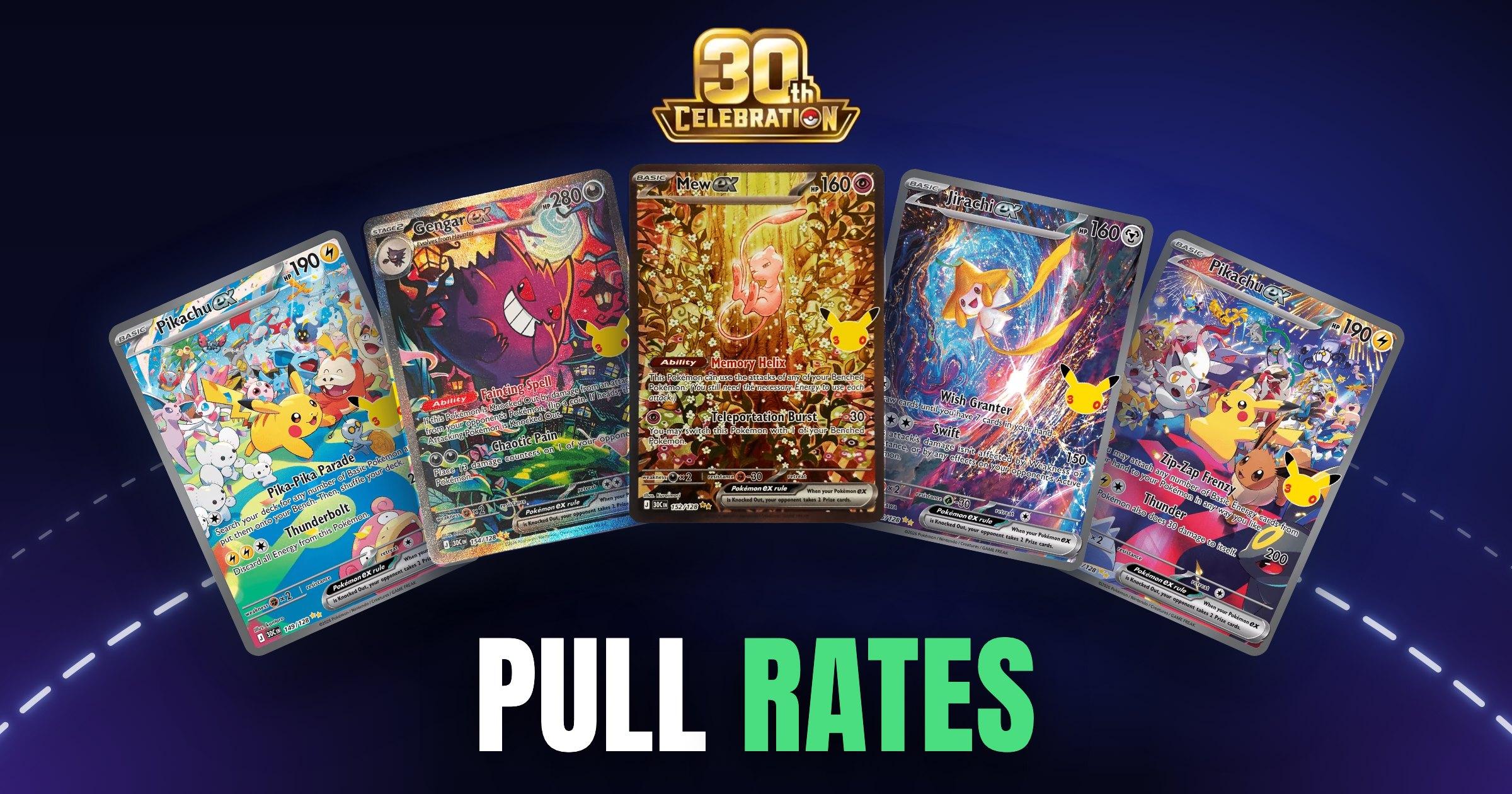
And then, plot twist. The 30th Celebration set, released on September 16, 2026, has no reverse holo versions of any card, because every card in the pack is already foil. For once, the parallel set simply doesn’t exist. After Ascended Heroes, honestly? My binder needed the rest.
| Set | Released | Parallel versions per eligible card | What to know |
|---|---|---|---|
| Legendary Collection | May 2002 | 1 | The fireworks reverse holo. The one that started it all. |
| Prismatic Evolutions | January 2025 | Up to 3 | Standard reverse, Poké Ball and Master Ball. Master Ball on regular Pokémon only. |
| Black Bolt and White Flare | July 2025 | Up to 3 | Standard reverse, Poké Ball and Master Ball, in both sets. |
| Mega Evolution base set | September 2025 | 1 | Plain reverse holo with no pattern. |
| Ascended Heroes | January 2026 | Up to 2 | Energy symbol reverse plus a ball (or Team Rocket “R”) reverse. Trainers get one. |
| 30th Celebration | September 2026 | 0 | Every card is foil, so there are no reverse holos at all. |
A Quick History of Shiny Cardboard
The very first English reverse holo actually wasn’t in a set at all. It was a Wizards Black Star Promo Entei, handed out with movie tickets for the third Pokémon film in 2001. Fun trivia to whip out at your next card show.
But it was the 2002 Legendary Collection that made the concept famous. It was the first set to include reverse holo cards, and every one of its 110 cards had a reverse holo version with an explosive, firework-like pattern that collectors still go crazy for today.
Since then, the style has evolved. In the EX era, reverse holos carried a stamp of the set’s logo in the bottom right corner of the picture, which is a great tell if you’re sorting a mystery box of mid-2000s cards. Later eras played around with rainbow shines and type-themed designs, and by the Scarlet & Violet era the standard reverse holo featured the type symbol in the background, with tiny Fire or Water symbols shimmering in the light.
Then came the ball patterns, the plain Mega Evolution shine, Ascended Heroes bringing Energy symbols back with a vengeance, and 30th Celebration skipping reverse holos entirely. This evolution means a seasoned collector can often identify the era of a card just by tilting it under a lamp.
How to Actually Track a Parallel Set
Here’s the thing nobody tells you: collecting a parallel set is easy. Remembering which versions you already own is the hard part. Pull the same Pokémon three times in three different finishes and your brain will absolutely convince you it’s a duplicate.
My advice:
- Log every version separately. Track the reverse holo (and any ball patterns) as their own entries in My Collection rather than just ticking the card number off. Your future self, standing at a card show wondering whether that Poké Ball foil is a need or a have, will thank you.
- Give each number its own row in the binder. Standard version first, then each parallel next to it. It looks fantastic, and gaps jump out at you instantly.
- Watch the pricey parallels. For the handful of reverse holos, Master Balls or ball patterns that actually cost real money, set up card price alerts and let the deals come to you instead of refreshing listings at 2am.
- Pick your patterns. In a set like Ascended Heroes or Prismatic Evolutions, nobody says you have to chase every finish. “All the Master Balls” or “just the Love Balls” is a perfectly respectable goal.
So, Do I Need to Collect the Parallel Set?
Absolutely not. And anyone who makes you feel like you do is taking the hobby way too seriously.
The beauty of Pokémon card collecting is that you get to set your own goals.
- Want to just collect your favorite Pokémon? Do it.
- Want to build a deck to play with your friends? Go for it.
- Want to complete the standard set and call it a day? Perfect.
- Want to chase only the Master Ball versions of the Pokémon you love? Honestly, that’s a great binder.
The parallel set is simply another path you can choose to take on your journey. It’s for the completionists, the magpies who are drawn to shiny things, and the fans who believe that every Pokémon deserves its day in the sun (or, more accurately, under a holographic sheen).
So, the next time someone asks if you’re collecting the parallel set, you can confidently tell them exactly what it is, which sets have one, which sets have three, and which brand new set has none at all. Then you can decide if you’re crazy enough to try. Go on, make that Bidoof sparkle.
You know you want to.